/ Mar 07, 2026
Trending
For new writers, it is worth understanding the difference between these two elements of a story. While not always essential in short stories, a novel will always have a denouement.
Gustav Freytag, a German novelist, and playwright outlined the five parts to a plot. Using the Freytag pyramid, the plot of a story is made up of five parts: exposition, rising action, climax, falling action, and denouement.
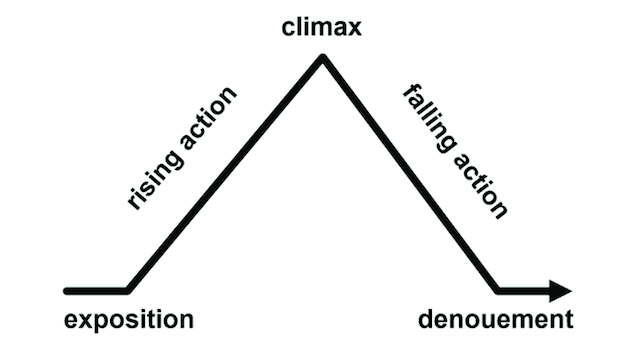
The exposition could also be called the introduction while denouement could entail resolution, revelation or even catastrophe.
Dénouement, derives from an Old French word, denouement, meaning an untying. From French desnoer, from des-, de- + noer, to tie. To undo, unknot or untie from old French. In modern French dénouement means outcome or conclusion.
In a literary work, it is the final part of the story when all the elements are satisfactorily concluded.
And they all lived happily ever after, encapsulates in simple terms the sense of all the knots in a story being resolved. In other words, it is when an author ties up all the loose ends.
If you think about detective mysteries, it is when the detective often gathers some characters together to explain how he or she solved the case.
For a romance story, after the climax of untieing all the misunderstandings, misadventures and missteps and perhaps even threats to commit suicide, the denouement will explain how happy the hero and heroine will be in the future.
However, for authors of a series of novels, sometimes there is a need to create anticipation for the next book. A cliffhanger ending is the most common device. But you should be careful about using this ending technique for a stand-alone title. Unless you know what you are doing, it could leave readers extremely dissatisfied, and feeling let down after reading hundreds of pages that lead to an open end.
Following a period of intense climax, a well-written ending or denouement should begin to let your reader come down slowly from all the action.
A critical point for writers to remember is Chekhov’s Gun.
“If in the first act you have hung a pistol on the wall, then in the following one it should be fired.” Anton Chekhov
It is an excellent reminder to make sure you have not left any unfired pistols in your story.
While the denouement can be used for this purpose, it should not be where a lot of forgotten loose ends in a story are conveniently tidied up. Every story must end. It is up to the skill of the author to write an ending that will be satisfying for the reader.
From late Middle English: from French épilogue, via Latin epilogus and Greek epilogos, from epi ‘in addition’ + logos ‘speech’.
The difference between denouement and epilogue is that one comes before and one after “The End”.
From the definition of epilogue, it pertains to a speech in addition to and after the story has concluded. Although less popular today in literature, it is when the author will speak directly to the audience or reader. The author may discuss the fates of the characters or add information that was not relevant to the story.
It is the opposite of a prologue, which comes before a story starts. Again, it is a part of literature that has lost favour in recent times.
Once you know the difference between these two devices, it is easy to define where they will fit in your story. The most important point to remember is that all books will have a denouement. But very few will contain or need an epilogue.
For new writers, it is worth understanding the difference between these two elements of a story. While not always essential in short stories, a novel will always have a denouement.
Gustav Freytag, a German novelist, and playwright outlined the five parts to a plot. Using the Freytag pyramid, the plot of a story is made up of five parts: exposition, rising action, climax, falling action, and denouement.
The exposition could also be called the introduction while denouement could entail resolution, revelation or even catastrophe.
Dénouement, derives from an Old French word, denouement, meaning an untying. From French desnoer, from des-, de- + noer, to tie. To undo, unknot or untie from old French. In modern French dénouement means outcome or conclusion.
In a literary work, it is the final part of the story when all the elements are satisfactorily concluded.
And they all lived happily ever after, encapsulates in simple terms the sense of all the knots in a story being resolved. In other words, it is when an author ties up all the loose ends.
If you think about detective mysteries, it is when the detective often gathers some characters together to explain how he or she solved the case.
For a romance story, after the climax of untieing all the misunderstandings, misadventures and missteps and perhaps even threats to commit suicide, the denouement will explain how happy the hero and heroine will be in the future.
However, for authors of a series of novels, sometimes there is a need to create anticipation for the next book. A cliffhanger ending is the most common device. But you should be careful about using this ending technique for a stand-alone title. Unless you know what you are doing, it could leave readers extremely dissatisfied, and feeling let down after reading hundreds of pages that lead to an open end.
Following a period of intense climax, a well-written ending or denouement should begin to let your reader come down slowly from all the action.
A critical point for writers to remember is Chekhov’s Gun.
“If in the first act you have hung a pistol on the wall, then in the following one it should be fired.” Anton Chekhov
It is an excellent reminder to make sure you have not left any unfired pistols in your story.
While the denouement can be used for this purpose, it should not be where a lot of forgotten loose ends in a story are conveniently tidied up. Every story must end. It is up to the skill of the author to write an ending that will be satisfying for the reader.
From late Middle English: from French épilogue, via Latin epilogus and Greek epilogos, from epi ‘in addition’ + logos ‘speech’.
The difference between denouement and epilogue is that one comes before and one after “The End”.
From the definition of epilogue, it pertains to a speech in addition to and after the story has concluded. Although less popular today in literature, it is when the author will speak directly to the audience or reader. The author may discuss the fates of the characters or add information that was not relevant to the story.
It is the opposite of a prologue, which comes before a story starts. Again, it is a part of literature that has lost favour in recent times.
Once you know the difference between these two devices, it is easy to define where they will fit in your story. The most important point to remember is that all books will have a denouement. But very few will contain or need an epilogue.