/ Mar 10, 2026
Trending
Dialogue tags should be used as a seasoning and not as the main ingredient in your writing.
Readers have a blind spot for the word said, so you can use it without any concern when you write dialogue.
As Stephen King wrote in On Writing, regarding dialogue tags, “The best form of dialogue attribution is said, as in he said, she said, Bill said, Monica said.”
However, there are times when the use of said synonyms helps to convey an extra element of emotion or tone of voice. Also, using a descriptive dialogue reporting verb avoids the use of adverbs.
I am sure every writer has read this quote about adverbs, again by Stephen King.
“I believe the road to hell is paved with adverbs, and I will shout it from the rooftops.”
When you are writing dialogue, you need to be aware that dialogue tags are the tones of voice of the author and not the characters. So keep them to a minimum.
When only two characters are speaking, it is often possible to avoid using them almost completely.
But when dialogue tag verbs are necessary, think carefully about your choice of vocabulary, and of course, go very easy on the use of adverbs.
There are times when you might want to make a line of dialogue a little more expressive in a novel or short story. Selecting other words for said can help you.
The infographic at the end of this article gives you a full list of 350 words you can use in place of said. There is also a full-text listing with words for said categorised by emotion or association.
Using a one-word reporting verb is a much better alternative than to add an adverb to a dialogue tag.
They are quick and to the point, but they still give a sense of an understandable emotive description.
Here are a few simple examples.
Bad: “I want to go home,” she said sadly.
Better: “I want to go home,” she cried.
Bad: “Where did they find it?” he asked curiously.
Better: “Where did they find it?” he wondered.
Bad: “Why did you do that?” he asked angrily.
Better: “Why did you do that?” he snarled.
Another quick and easy way to find a new synonym for reporting verbs is if you are a Grammarly user. You are only one right-click away from a long list of suggested replacements for words to use instead of said.

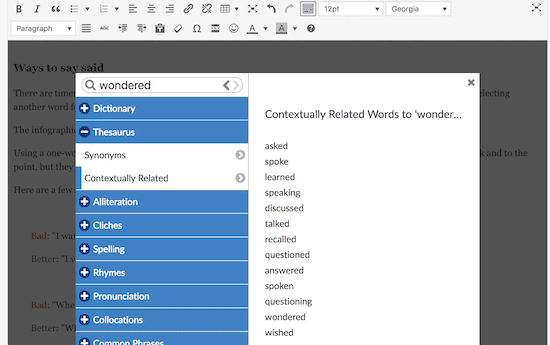
If you use ProWritingAid, you can get even more help with both simple or contextural choices for said synonyms.
Before we get to the full list of verbs that you can use to replace said, here is a quick concise selection listed by emotions and situations that you might want to use for your quick reference.
answered, conceded, concurred, explained, replied, responded
doubtfully, guessed, hesitated, vacillated
asked, inquired, puzzled, queried, questioned, quizzed, wondered
bleated, blurted, exclaimed, gasped, sputtered
bawled, bewailed, blubbered, cried, lamented, sniffled, sobbed, wailed, wept
bragged, gibed, jeered, lied, nagged, provoked
breathed, promised, purred, sighed
advised, appealed, asserted, begged, beseeched, cajoled, entreated, implored, urged
beamed, bubbled, cheered, chirped, chuckled, giggled, grinned, joked, sang, smiled, trilled
barked, cursed, exploded, fumed, growled, hissed, raged, ranted, roared, scowled, snarled, swore, yelled
cringed, grimaced, groused, grunted, rasped, sniffed, snorted
gulped, prayed, quavered, shrieked, squealed, stuttered, whimpered, whined
admitted, confessed, hesitated, mumbled
Here is the full list of verbs you can use instead of said.
You can use the infographic below for your writing reference, or you can share it on your blog with your readers.
Feel free to copy and paste these words to replace said for your own use.
The emotion of ANGER
accused, argued, badgered, barked, bellowed, bickered, chastised, chided, clipped, clucked, commanded, complained, corrected, countered, cursed, dared, demanded, disagreed, exploded, fumed, goaded, growled, grumbled, harshed, hissed, hollered, howled, huffed, insulted, interrupted, muttered, objected, ordered, raged, ranted, retaliated, retorted, roared, scoffed, scolded, scowled, screamed, screeched, seethed, shot, shouted, shrilled, snapped, snarled, sneered, spluttered, stormed, swore, taunted, threatened, warned, yelled
The action of ANSWERING
answered, clarified, conceded, concurred, deflected, disputed, explained, interjected, protested, reassured, remarked, replied, responded, stated
The emotion of DISGUST
cringed, grimaced, groused, grunted, mocked, rasped, refused, smirked, sniffed, snorted
The emotion of EMBARRASSMENT
admitted, confessed, hesitated, mumbled
The emotion of FEAR
babbled, croaked, denied, doubted, fretted, groaned, gulped, moaned, panted, prayed, quavered, shrieked, slurred, squeaked, squealed, stammered, stuttered, whimpered, whined, whispered
The emotion of HAPPINESS
approved, beamed, bubbled, burst, cackled, chatted, chattered, cheered, chirped, chortled, chorused, chuckled, complimented, congratulated, cooed, crowed, effused, exulted, forgave, giggled, grinned, gurgled, gushed, hummed, joked, praised, resounded, sang, simpered, smiled, thanked, trilled
The emotion of LOVE or ROMANCE
breathed, expressed, proclaimed, promised, purred, sighed
Words associated with PERSUASION
advised, appealed, asserted, assured, avowed, begged, beseeched, cajoled, claimed, convinced, encouraged, entreated, implored, needled, pleaded, stressed, suggested, urged
Words associated with PROVOCATION
bragged, exasperated, gibed, jested, jeered, joked, lied, mimicked, nagged, provoked, quipped, sassed
The emotion of SADNESS
apologized, bawled, bewailed, blubbered, comforted, consoled, cried, lamented, mumbled, murmured, sighed, sniffled, sobbed, spilled, wailed, wept
The emotion of SURPRISE
bleated, blurted, exclaimed, gasped, marvelled, perplexed, sputtered, yelped
Words associated with QUESTIONS or CURIOSITY
asked, challenged, coaxed, hinted, inquired, pleaded, puzzled, queried, questioned, quizzed, wondered
Words associated with UNCERTAINTY or CONFUSION
cautioned, doubtfully, guessed, hesitated, vacillated
NON-EMOTIVE
acknowledged, acquiesced, added, addressed, affirmed, agreed, alliterated, announced, articulated, began, bet, boasted, boomed, broke in, called, chimed in, coached, commented, concluded, confided, confirmed, considered, continued, contributed, conversed, deadpanned, decided, declared, defended, demurred, described, disclosed, divulged, drawled, echoed, emphasized, ended, finished, gloated, greeted, hypothesized, imitated, implied, informed, insinuated, insisted, intoned, instructed, jabbered, lectured, lisped, maintained, mentioned, monotoned, mouthed, mused, motioned, nodded, noted, notified, observed, offered, opined, pestered, piped, pointed out, pondered, prattled, pressed, pronounced, proposed, put in, quoted, rambled, rattled on, read, reasoned, recalled, reckoned, recited, recounted, reiterated, related, remembered, reminded, repeated, reported, requested, restated, revealed, rhymed, ridiculed, sibilated, sneezed, snickered, speculated, spoke, started, surmised, sympathized, teased, tempted, tested, testified, theorized, thought aloud, told, uttered, ventured, verified, volunteered, vowed, went on, wheezed, wished, yakked, yapped, yawned
Synonyms can always improve your writing by avoiding repetition.
Finding new words and new ways to say things is one of the pleasures of being a writer. It doesn’t mean that you need to use long, uncommon or complex vocabulary. There are usually simple alternatives for most words.
But using other words instead of said is always a good idea, even if said is a word that most people are blind to when reading. By replacing it with a more active reporting verb, you can quickly add much more descriptive value to your novel or short story.
Dialogue tags should be used as a seasoning and not as the main ingredient in your writing.
Readers have a blind spot for the word said, so you can use it without any concern when you write dialogue.
As Stephen King wrote in On Writing, regarding dialogue tags, “The best form of dialogue attribution is said, as in he said, she said, Bill said, Monica said.”
However, there are times when the use of said synonyms helps to convey an extra element of emotion or tone of voice. Also, using a descriptive dialogue reporting verb avoids the use of adverbs.
I am sure every writer has read this quote about adverbs, again by Stephen King.
“I believe the road to hell is paved with adverbs, and I will shout it from the rooftops.”
When you are writing dialogue, you need to be aware that dialogue tags are the tones of voice of the author and not the characters. So keep them to a minimum.
When only two characters are speaking, it is often possible to avoid using them almost completely.
But when dialogue tag verbs are necessary, think carefully about your choice of vocabulary, and of course, go very easy on the use of adverbs.
There are times when you might want to make a line of dialogue a little more expressive in a novel or short story. Selecting other words for said can help you.
The infographic at the end of this article gives you a full list of 350 words you can use in place of said. There is also a full-text listing with words for said categorised by emotion or association.
Using a one-word reporting verb is a much better alternative than to add an adverb to a dialogue tag.
They are quick and to the point, but they still give a sense of an understandable emotive description.
Here are a few simple examples.
Bad: “I want to go home,” she said sadly.
Better: “I want to go home,” she cried.
Bad: “Where did they find it?” he asked curiously.
Better: “Where did they find it?” he wondered.
Bad: “Why did you do that?” he asked angrily.
Better: “Why did you do that?” he snarled.
Another quick and easy way to find a new synonym for reporting verbs is if you are a Grammarly user. You are only one right-click away from a long list of suggested replacements for words to use instead of said.
If you use ProWritingAid, you can get even more help with both simple or contextural choices for said synonyms.
Before we get to the full list of verbs that you can use to replace said, here is a quick concise selection listed by emotions and situations that you might want to use for your quick reference.
answered, conceded, concurred, explained, replied, responded
doubtfully, guessed, hesitated, vacillated
asked, inquired, puzzled, queried, questioned, quizzed, wondered
bleated, blurted, exclaimed, gasped, sputtered
bawled, bewailed, blubbered, cried, lamented, sniffled, sobbed, wailed, wept
bragged, gibed, jeered, lied, nagged, provoked
breathed, promised, purred, sighed
advised, appealed, asserted, begged, beseeched, cajoled, entreated, implored, urged
beamed, bubbled, cheered, chirped, chuckled, giggled, grinned, joked, sang, smiled, trilled
barked, cursed, exploded, fumed, growled, hissed, raged, ranted, roared, scowled, snarled, swore, yelled
cringed, grimaced, groused, grunted, rasped, sniffed, snorted
gulped, prayed, quavered, shrieked, squealed, stuttered, whimpered, whined
admitted, confessed, hesitated, mumbled
Here is the full list of verbs you can use instead of said.
You can use the infographic below for your writing reference, or you can share it on your blog with your readers.
Feel free to copy and paste these words to replace said for your own use.
The emotion of ANGER
accused, argued, badgered, barked, bellowed, bickered, chastised, chided, clipped, clucked, commanded, complained, corrected, countered, cursed, dared, demanded, disagreed, exploded, fumed, goaded, growled, grumbled, harshed, hissed, hollered, howled, huffed, insulted, interrupted, muttered, objected, ordered, raged, ranted, retaliated, retorted, roared, scoffed, scolded, scowled, screamed, screeched, seethed, shot, shouted, shrilled, snapped, snarled, sneered, spluttered, stormed, swore, taunted, threatened, warned, yelled
The action of ANSWERING
answered, clarified, conceded, concurred, deflected, disputed, explained, interjected, protested, reassured, remarked, replied, responded, stated
The emotion of DISGUST
cringed, grimaced, groused, grunted, mocked, rasped, refused, smirked, sniffed, snorted
The emotion of EMBARRASSMENT
admitted, confessed, hesitated, mumbled
The emotion of FEAR
babbled, croaked, denied, doubted, fretted, groaned, gulped, moaned, panted, prayed, quavered, shrieked, slurred, squeaked, squealed, stammered, stuttered, whimpered, whined, whispered
The emotion of HAPPINESS
approved, beamed, bubbled, burst, cackled, chatted, chattered, cheered, chirped, chortled, chorused, chuckled, complimented, congratulated, cooed, crowed, effused, exulted, forgave, giggled, grinned, gurgled, gushed, hummed, joked, praised, resounded, sang, simpered, smiled, thanked, trilled
The emotion of LOVE or ROMANCE
breathed, expressed, proclaimed, promised, purred, sighed
Words associated with PERSUASION
advised, appealed, asserted, assured, avowed, begged, beseeched, cajoled, claimed, convinced, encouraged, entreated, implored, needled, pleaded, stressed, suggested, urged
Words associated with PROVOCATION
bragged, exasperated, gibed, jested, jeered, joked, lied, mimicked, nagged, provoked, quipped, sassed
The emotion of SADNESS
apologized, bawled, bewailed, blubbered, comforted, consoled, cried, lamented, mumbled, murmured, sighed, sniffled, sobbed, spilled, wailed, wept
The emotion of SURPRISE
bleated, blurted, exclaimed, gasped, marvelled, perplexed, sputtered, yelped
Words associated with QUESTIONS or CURIOSITY
asked, challenged, coaxed, hinted, inquired, pleaded, puzzled, queried, questioned, quizzed, wondered
Words associated with UNCERTAINTY or CONFUSION
cautioned, doubtfully, guessed, hesitated, vacillated
NON-EMOTIVE
acknowledged, acquiesced, added, addressed, affirmed, agreed, alliterated, announced, articulated, began, bet, boasted, boomed, broke in, called, chimed in, coached, commented, concluded, confided, confirmed, considered, continued, contributed, conversed, deadpanned, decided, declared, defended, demurred, described, disclosed, divulged, drawled, echoed, emphasized, ended, finished, gloated, greeted, hypothesized, imitated, implied, informed, insinuated, insisted, intoned, instructed, jabbered, lectured, lisped, maintained, mentioned, monotoned, mouthed, mused, motioned, nodded, noted, notified, observed, offered, opined, pestered, piped, pointed out, pondered, prattled, pressed, pronounced, proposed, put in, quoted, rambled, rattled on, read, reasoned, recalled, reckoned, recited, recounted, reiterated, related, remembered, reminded, repeated, reported, requested, restated, revealed, rhymed, ridiculed, sibilated, sneezed, snickered, speculated, spoke, started, surmised, sympathized, teased, tempted, tested, testified, theorized, thought aloud, told, uttered, ventured, verified, volunteered, vowed, went on, wheezed, wished, yakked, yapped, yawned
Synonyms can always improve your writing by avoiding repetition.
Finding new words and new ways to say things is one of the pleasures of being a writer. It doesn’t mean that you need to use long, uncommon or complex vocabulary. There are usually simple alternatives for most words.
But using other words instead of said is always a good idea, even if said is a word that most people are blind to when reading. By replacing it with a more active reporting verb, you can quickly add much more descriptive value to your novel or short story.