/ Mar 07, 2026
Trending

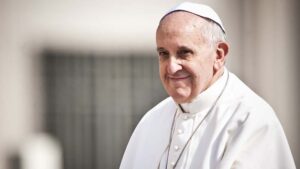
Pope Francis, born Jorge Mario Bergoglio in Buenos Aires, Argentina, in 1936, served as the 266th pope of the Roman Catholic Church from 2013 until his death in April 2025. As the first Latin American and Jesuit pope, his papacy was marked by a commitment to humility, social justice, and efforts to bridge divides within and outside the Church.
Ordained as a Jesuit priest in 1969, Bergoglio navigated Argentina’s political turmoil with a focus on pastoral care. He became Archbishop of Buenos Aires in 1998 and was elevated to cardinal in 2001. Known for his simple lifestyle and dedication to the poor, he was elected pope in March 2013 following Pope Benedict XVI’s resignation.
Pope Francis chose his papal name in honor of St. Francis of Assisi, reflecting his dedication to humility and care for the marginalized. He eschewed the traditional papal apartments for modest accommodations and was often seen in simple attire, emphasizing a Church that is close to the people.
His advocacy extended to migrants and refugees, whom he consistently supported throughout his papacy. He visited sites like Lampedusa and Lesbos to honor those who perished seeking safety, even personally bringing refugees to Italy.
In 2015, Pope Francis released the encyclical Laudato Si’, calling for urgent action on climate change and environmental degradation. He emphasized the ethical and spiritual dimensions of environmental issues, urging a collective responsibility to care for “our common home.”
Pope Francis sought to make the Church more inclusive. He allowed blessings for same-sex couples and advocated for increased roles for women in church administration. However, he maintained traditional stances on issues like the ordination of women and contraception, leading to both praise and criticism from different factions within the Church.
Francis prioritized interfaith dialogue, fostering relationships with leaders of various religions. Notably, he signed the Document on Human Fraternity with Grand Imam Ahmed el-Tayeb in 2019, promoting peace and coexistence among different faiths.
In 2022, Pope Francis visited Canada to apologize for the Catholic Church’s role in the residential school system that harmed Indigenous communities. He described the trip as a “penitential pilgrimage,” emphasizing the need for healing and reconciliation.
Pope Francis passed away on April 21, 2025, at the age of 88. His funeral in Rome attracted thousands, including global leaders and faithful from around the world, reflecting his widespread impact. He is remembered for his efforts to modernize the Church, his compassion for the marginalized, and his commitment to interfaith dialogue.
Pope Francis’s papacy was a blend of tradition and innovation, marked by a deep concern for humanity and the planet. His legacy continues to influence discussions on the role of the Church in the modern world.
Pope Francis, born Jorge Mario Bergoglio in Buenos Aires, Argentina, in 1936, served as the 266th pope of the Roman Catholic Church from 2013 until his death in April 2025. As the first Latin American and Jesuit pope, his papacy was marked by a commitment to humility, social justice, and efforts to bridge divides within and outside the Church.
Ordained as a Jesuit priest in 1969, Bergoglio navigated Argentina’s political turmoil with a focus on pastoral care. He became Archbishop of Buenos Aires in 1998 and was elevated to cardinal in 2001. Known for his simple lifestyle and dedication to the poor, he was elected pope in March 2013 following Pope Benedict XVI’s resignation.
Pope Francis chose his papal name in honor of St. Francis of Assisi, reflecting his dedication to humility and care for the marginalized. He eschewed the traditional papal apartments for modest accommodations and was often seen in simple attire, emphasizing a Church that is close to the people.
His advocacy extended to migrants and refugees, whom he consistently supported throughout his papacy. He visited sites like Lampedusa and Lesbos to honor those who perished seeking safety, even personally bringing refugees to Italy.
In 2015, Pope Francis released the encyclical Laudato Si’, calling for urgent action on climate change and environmental degradation. He emphasized the ethical and spiritual dimensions of environmental issues, urging a collective responsibility to care for “our common home.”
Pope Francis sought to make the Church more inclusive. He allowed blessings for same-sex couples and advocated for increased roles for women in church administration. However, he maintained traditional stances on issues like the ordination of women and contraception, leading to both praise and criticism from different factions within the Church.
Francis prioritized interfaith dialogue, fostering relationships with leaders of various religions. Notably, he signed the Document on Human Fraternity with Grand Imam Ahmed el-Tayeb in 2019, promoting peace and coexistence among different faiths.
In 2022, Pope Francis visited Canada to apologize for the Catholic Church’s role in the residential school system that harmed Indigenous communities. He described the trip as a “penitential pilgrimage,” emphasizing the need for healing and reconciliation.
Pope Francis passed away on April 21, 2025, at the age of 88. His funeral in Rome attracted thousands, including global leaders and faithful from around the world, reflecting his widespread impact. He is remembered for his efforts to modernize the Church, his compassion for the marginalized, and his commitment to interfaith dialogue.
Pope Francis’s papacy was a blend of tradition and innovation, marked by a deep concern for humanity and the planet. His legacy continues to influence discussions on the role of the Church in the modern world.
It is a long established fact that a reader will be distracted by the readable content of a page when looking at its layout. The point of using Lorem Ipsum is that it has a more-or-less normal distribution of letters, as opposed to using ‘Content here, content here’, making it look like readable English. Many desktop publishing packages and web page editors now use Lorem Ipsum as their default model text, and a search for ‘lorem ipsum’ will uncover many web sites still in their infancy.
It is a long established fact that a reader will be distracted by the readable content of a page when looking at its layout. The point of using Lorem Ipsum is that it has a more-or-less normal distribution of letters, as opposed to using ‘Content here, content here’, making it look like readable English. Many desktop publishing packages and web page editors now use Lorem Ipsum as their default model text, and a search for ‘lorem ipsum’ will uncover many web sites still in their infancy.
The point of using Lorem Ipsum is that it has a more-or-less normal distribution of letters, as opposed to using ‘Content here, content here’, making

The point of using Lorem Ipsum is that it has a more-or-less normal distribution of letters, as opposed to using ‘Content here, content here’, making it look like readable English. Many desktop publishing packages and web page editors now use Lorem Ipsum as their default model text, and a search for ‘lorem ipsum’ will uncover many web sites still in their infancy.

It is a long established fact that a reader will be distracted by the readable content of a page when looking at its layout. The point of using Lorem Ipsum is that it has a more-or-less normal distribution
Copyright BlazeThemes. 2023