News Elementor

RECENT NEWS

Remembering Pope Francis: His Funeral and Global Mourning

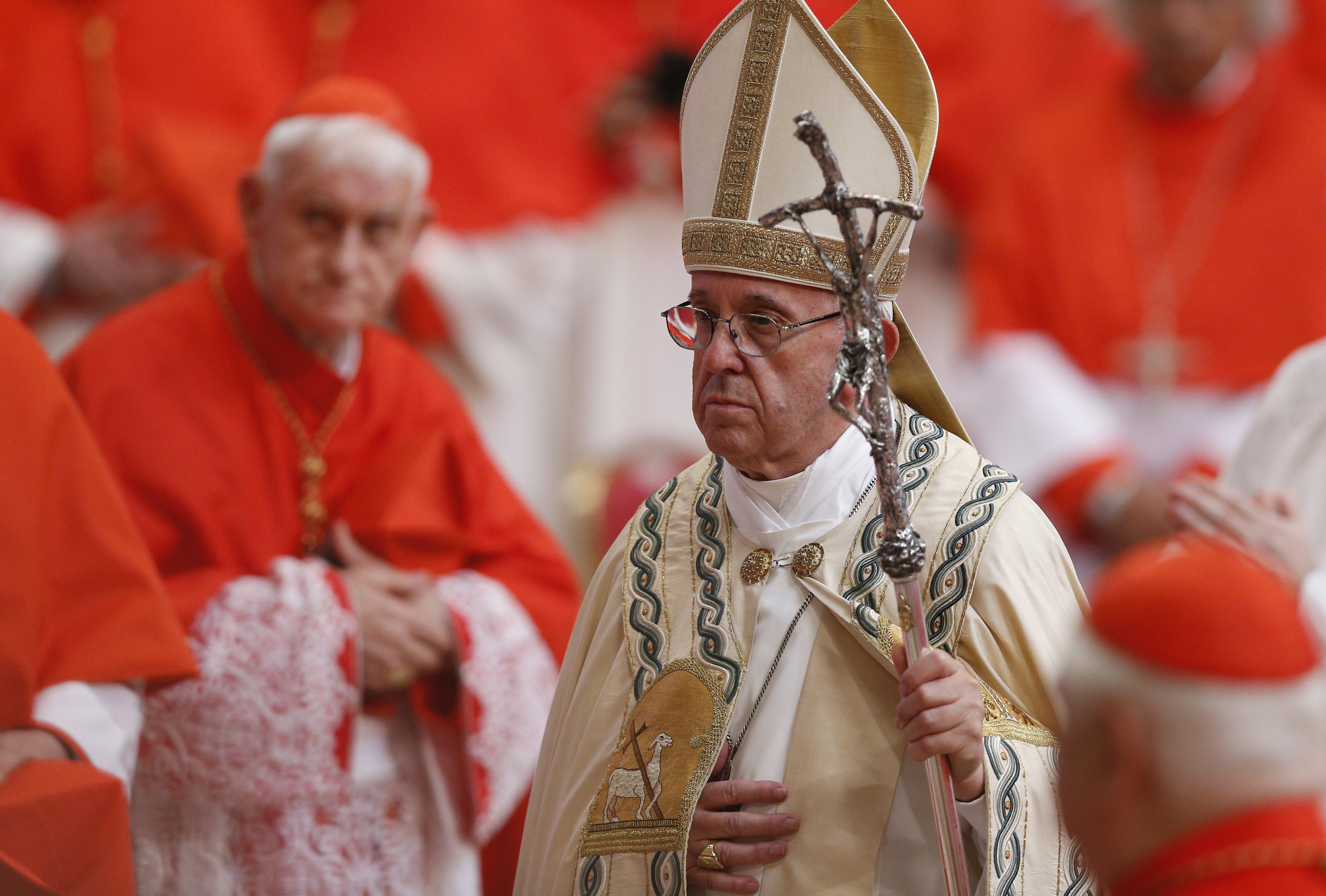
On a day heavy with history and emotion, the world came together to bid farewell to Pope Francis, one of the most transformative figures in modern Catholicism. His funeral, attended by religious leaders, heads of state, and countless faithful, was not just a solemn rite but a global moment of reflection — a testament to a life devoted to humility, mercy, and hope.

Pope Francis, the 266th successor of Saint Peter, left behind a profound legacy that transcended borders, faiths, and political divisions. His funeral and the global mourning that followed were fitting closures to a life spent in service to others, animated by a deep commitment to compassion, justice, and the dignity of every human being.

A Humble Leader to the End

True to his character, the funeral arrangements for Pope Francis reflected his lifelong emphasis on simplicity. Long before his passing, Francis had expressed his desire for a modest funeral, eschewing the elaborate pomp traditionally associated with papal funerals.

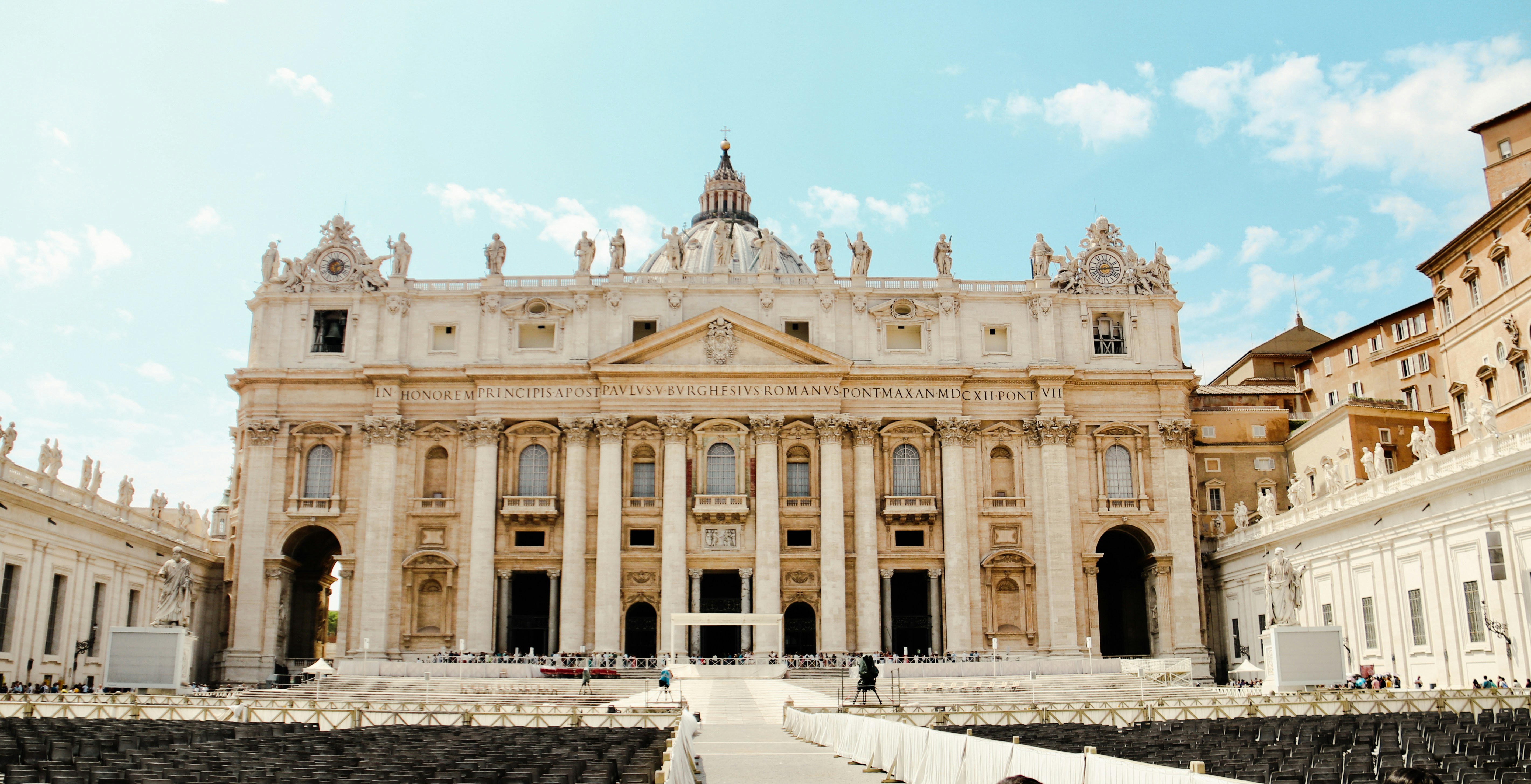
Held in St. Peter’s Square, beneath the imposing façade of St. Peter’s Basilica, the funeral was dignified yet restrained. His simple wooden casket — reminiscent of the one used for Pope John Paul II — stood as a powerful symbol of his message: greatness is found in humility.

Instead of layers of lavish vestments, he was dressed in plain white liturgical garments, with the pastoral staff he had carried throughout his papacy resting beside him — a shepherd to the very end.

The Liturgical Ceremony: A Global Gathering

The funeral Mass was celebrated by his successor and attended by hundreds of cardinals, bishops, priests, and deacons from every corner of the globe. Representing a Church of rich diversity, the ceremony incorporated readings and prayers in multiple languages, including Spanish, Italian, English, Arabic, Chinese, and Swahili.

Pope Francis had spent his life emphasizing the universality of the Church, and his funeral reflected this global reach.

The homily, delivered with emotion, focused not on accolades but on Francis’s constant emphasis on mercy, care for the marginalized, and spiritual discernment. Instead of canonizing him in death, the homily was a meditation on the Gospel of the Beatitudes — a clear nod to Francis’s teaching that holiness lies in living out compassion and justice in everyday life.

As the funeral Mass ended, the faithful erupted into a long, heartfelt applause — a spontaneous gesture of gratitude and love.

World Leaders and Religious Representatives

Never before had a papal funeral attracted such a diverse array of world leaders and religious representatives. Presidents, monarchs, prime ministers, and diplomats filled the Square, as did religious leaders from the Orthodox, Protestant, Jewish, Muslim, Hindu, and Buddhist communities.

Notable among the mourners were the Ecumenical Patriarch of Constantinople, the Archbishop of Canterbury, and the Chief Rabbi of Rome — clear signs of Francis’s tireless work for interfaith dialogue. The Grand Imam of Al-Azhar, one of the most prominent Islamic leaders, attended in a rare and powerful display of Muslim-Christian solidarity.

The secular world was also present in force. Many leaders, even from countries where Catholicism is a minority faith, traveled to Rome to pay tribute. From Latin America, where Francis was born and first served as a priest, entire national delegations arrived, with flags lowered to half-mast and days of national mourning declared.

Their presence was a striking testament to Pope Francis’s moral influence beyond Catholicism — a leader of conscience on issues ranging from climate change and economic inequality to migration and peace.

Mourning Across the Continents

As the funeral unfolded in Rome, scenes of mourning played out across the world.

  • Latin America wept especially deeply. In Buenos Aires, where Jorge Mario Bergoglio had once walked the streets as a simple parish priest and later as Archbishop, thousands gathered in the Plaza de Mayo for a national Mass in his honor. Many carried handwritten signs reading “Gracias, Papa Francisco” (Thank you, Pope Francis).
  • In Africa, where Catholicism has grown most rapidly in recent decades, churches overflowed with faithful offering prayers and lighting candles. In Nairobi, Kinshasa, and Lagos, public squares were filled with music, prayer, and dance — a celebration of the life of a pope who had championed their cause on the world stage.
  • In Asia, particularly in the Philippines — the largest Catholic country in the region — cathedrals hosted all-night vigils. In China and Vietnam, where religious practice is often restricted, quiet gatherings honored the man who had persistently advocated for religious freedom and dialogue.
  • Europe, where secularism has grown, still saw churches packed beyond capacity. In Italy, Spain, and Poland, bells tolled in cities and villages alike. Even in nations where Catholicism is a minority, many paused to honor a man whose compassion had earned broad respect.

In every corner of the world, the mourning was not just for the leader of the Catholic Church but for a figure who had become a symbol of kindness in an often divided world.

Media Tributes: A Life Remembered

The world’s media poured out tributes in the hours and days following his death. Major newspapers across continents dedicated front pages to Francis’s memory, often choosing photographs that captured his humanity: embracing a disfigured man in St. Peter’s Square, washing the feet of prisoners, laughing with children, kneeling to pray alone during the early days of the COVID-19 pandemic.

Editorials praised his courage in addressing global issues like the environment (Laudato Si’), economic inequality (Fratelli Tutti), and clerical abuse. They also noted his commitment to transparency within the Church and his efforts to shift the Church’s focus from internal politics to outward mission.

Commentators highlighted his approachability — his phone calls to ordinary people who wrote him letters, his spontaneous remarks, his preference for modest accommodations over the grand Apostolic Palace.

Francis was, they noted, a “pope of the people” in the truest sense.

His Final Messages

Perhaps most moving were the final messages left behind by Pope Francis himself.

In a spiritual testament, released shortly after his death, he urged the Church to remain faithful to the Gospel, to be a Church for the poor, and to continue walking the path of discernment and dialogue. He asked forgiveness for any mistakes he had made and expressed his profound trust in God’s mercy.

It was a farewell in keeping with his papacy: honest, humble, and hopeful.

The Future of the Church Without Him

As the Church begins the difficult transition to new leadership, the question looms: what happens now?

Pope Francis’s death leaves a monumental legacy but also pressing challenges. The Synod on Synodality, a process he initiated to reform Church governance and make it more participatory, remains unfinished. His emphasis on pastoral care over rigid doctrinal enforcement, particularly on issues like LGBT outreach, divorce, and remarriage, leaves the Church at a crossroads.

His successors will have to navigate a world where Francis’s spirit still lingers: a spirit calling for compassion over judgment, dialogue over division, and humility over grandeur.

The cardinals, many of whom were appointed by Francis himself and share his vision, will play a crucial role in shaping the next chapter of the Church’s story.

Personal Stories: The People’s Pope

Beyond the formal tributes and state ceremonies, personal stories flooded social media and news outlets — snapshots of how Pope Francis touched individual lives.

  • A Syrian refugee recalled meeting him in a refugee camp and receiving words of hope.
  • An Argentine street vendor told of the young Fr. Bergoglio buying coffee and chatting like an old friend.
  • An inmate in an Italian prison remembered the pope kneeling to wash his feet, weeping together in silence.

These personal moments, multiplied thousands of times over, shaped Francis’s image as a true servant leader — one who believed in meeting people where they were, in the joys and sorrows of ordinary life.

A Legacy Carved in Hearts

When the final prayers were said and the bells of St. Peter’s Basilica tolled their mournful peal, Pope Francis was laid to rest beneath the basilica he had loved so dearly — near the tomb of St. Peter, whose legacy he had honored with such fervor.

Yet Pope Francis’s true resting place is not just in Rome’s sacred stones but in the hearts of millions across the world who saw in him a reflection of Christ’s mercy.

He reminded a weary world that faith can be a source of joy, that leadership can be rooted in service, and that love — not fear — is the heart of the Gospel.

His final journey may have ended, but his message lives on: “Go forward,” he once said, “always forward.”

Conclusion

The funeral of Pope Francis and the global mourning that followed were not merely a tribute to the passing of a religious figure; they were a profound testament to a life that touched the world’s conscience.

In an era marked by division and disillusionment, Pope Francis stood as a beacon of humility, inclusiveness, and hope. His death marks the end of an extraordinary chapter in Church history — but the seeds he planted in countless hearts will continue to bear fruit for generations to come.

As the banners of mourning are lowered, and the crowds disperse, the echo of his life’s message remains: in simplicity, in service, in mercy — there lies the true greatness to which we are all called.

On a day heavy with history and emotion, the world came together to bid farewell to Pope Francis, one of the most transformative figures in modern Catholicism. His funeral, attended by religious leaders, heads of state, and countless faithful, was not just a solemn rite but a global moment of reflection — a testament to a life devoted to humility, mercy, and hope.

Pope Francis, the 266th successor of Saint Peter, left behind a profound legacy that transcended borders, faiths, and political divisions. His funeral and the global mourning that followed were fitting closures to a life spent in service to others, animated by a deep commitment to compassion, justice, and the dignity of every human being.

A Humble Leader to the End

True to his character, the funeral arrangements for Pope Francis reflected his lifelong emphasis on simplicity. Long before his passing, Francis had expressed his desire for a modest funeral, eschewing the elaborate pomp traditionally associated with papal funerals.

Held in St. Peter’s Square, beneath the imposing façade of St. Peter’s Basilica, the funeral was dignified yet restrained. His simple wooden casket — reminiscent of the one used for Pope John Paul II — stood as a powerful symbol of his message: greatness is found in humility.

Instead of layers of lavish vestments, he was dressed in plain white liturgical garments, with the pastoral staff he had carried throughout his papacy resting beside him — a shepherd to the very end.

The Liturgical Ceremony: A Global Gathering

The funeral Mass was celebrated by his successor and attended by hundreds of cardinals, bishops, priests, and deacons from every corner of the globe. Representing a Church of rich diversity, the ceremony incorporated readings and prayers in multiple languages, including Spanish, Italian, English, Arabic, Chinese, and Swahili.

Pope Francis had spent his life emphasizing the universality of the Church, and his funeral reflected this global reach.

The homily, delivered with emotion, focused not on accolades but on Francis’s constant emphasis on mercy, care for the marginalized, and spiritual discernment. Instead of canonizing him in death, the homily was a meditation on the Gospel of the Beatitudes — a clear nod to Francis’s teaching that holiness lies in living out compassion and justice in everyday life.

As the funeral Mass ended, the faithful erupted into a long, heartfelt applause — a spontaneous gesture of gratitude and love.

World Leaders and Religious Representatives

Never before had a papal funeral attracted such a diverse array of world leaders and religious representatives. Presidents, monarchs, prime ministers, and diplomats filled the Square, as did religious leaders from the Orthodox, Protestant, Jewish, Muslim, Hindu, and Buddhist communities.

Notable among the mourners were the Ecumenical Patriarch of Constantinople, the Archbishop of Canterbury, and the Chief Rabbi of Rome — clear signs of Francis’s tireless work for interfaith dialogue. The Grand Imam of Al-Azhar, one of the most prominent Islamic leaders, attended in a rare and powerful display of Muslim-Christian solidarity.

The secular world was also present in force. Many leaders, even from countries where Catholicism is a minority faith, traveled to Rome to pay tribute. From Latin America, where Francis was born and first served as a priest, entire national delegations arrived, with flags lowered to half-mast and days of national mourning declared.

Their presence was a striking testament to Pope Francis’s moral influence beyond Catholicism — a leader of conscience on issues ranging from climate change and economic inequality to migration and peace.

Mourning Across the Continents

As the funeral unfolded in Rome, scenes of mourning played out across the world.

  • Latin America wept especially deeply. In Buenos Aires, where Jorge Mario Bergoglio had once walked the streets as a simple parish priest and later as Archbishop, thousands gathered in the Plaza de Mayo for a national Mass in his honor. Many carried handwritten signs reading “Gracias, Papa Francisco” (Thank you, Pope Francis).
  • In Africa, where Catholicism has grown most rapidly in recent decades, churches overflowed with faithful offering prayers and lighting candles. In Nairobi, Kinshasa, and Lagos, public squares were filled with music, prayer, and dance — a celebration of the life of a pope who had championed their cause on the world stage.
  • In Asia, particularly in the Philippines — the largest Catholic country in the region — cathedrals hosted all-night vigils. In China and Vietnam, where religious practice is often restricted, quiet gatherings honored the man who had persistently advocated for religious freedom and dialogue.
  • Europe, where secularism has grown, still saw churches packed beyond capacity. In Italy, Spain, and Poland, bells tolled in cities and villages alike. Even in nations where Catholicism is a minority, many paused to honor a man whose compassion had earned broad respect.

In every corner of the world, the mourning was not just for the leader of the Catholic Church but for a figure who had become a symbol of kindness in an often divided world.

Media Tributes: A Life Remembered

The world’s media poured out tributes in the hours and days following his death. Major newspapers across continents dedicated front pages to Francis’s memory, often choosing photographs that captured his humanity: embracing a disfigured man in St. Peter’s Square, washing the feet of prisoners, laughing with children, kneeling to pray alone during the early days of the COVID-19 pandemic.

Editorials praised his courage in addressing global issues like the environment (Laudato Si’), economic inequality (Fratelli Tutti), and clerical abuse. They also noted his commitment to transparency within the Church and his efforts to shift the Church’s focus from internal politics to outward mission.

Commentators highlighted his approachability — his phone calls to ordinary people who wrote him letters, his spontaneous remarks, his preference for modest accommodations over the grand Apostolic Palace.

Francis was, they noted, a “pope of the people” in the truest sense.

His Final Messages

Perhaps most moving were the final messages left behind by Pope Francis himself.

In a spiritual testament, released shortly after his death, he urged the Church to remain faithful to the Gospel, to be a Church for the poor, and to continue walking the path of discernment and dialogue. He asked forgiveness for any mistakes he had made and expressed his profound trust in God’s mercy.

It was a farewell in keeping with his papacy: honest, humble, and hopeful.

The Future of the Church Without Him

As the Church begins the difficult transition to new leadership, the question looms: what happens now?

Pope Francis’s death leaves a monumental legacy but also pressing challenges. The Synod on Synodality, a process he initiated to reform Church governance and make it more participatory, remains unfinished. His emphasis on pastoral care over rigid doctrinal enforcement, particularly on issues like LGBT outreach, divorce, and remarriage, leaves the Church at a crossroads.

His successors will have to navigate a world where Francis’s spirit still lingers: a spirit calling for compassion over judgment, dialogue over division, and humility over grandeur.

The cardinals, many of whom were appointed by Francis himself and share his vision, will play a crucial role in shaping the next chapter of the Church’s story.

Personal Stories: The People’s Pope

Beyond the formal tributes and state ceremonies, personal stories flooded social media and news outlets — snapshots of how Pope Francis touched individual lives.

  • A Syrian refugee recalled meeting him in a refugee camp and receiving words of hope.
  • An Argentine street vendor told of the young Fr. Bergoglio buying coffee and chatting like an old friend.
  • An inmate in an Italian prison remembered the pope kneeling to wash his feet, weeping together in silence.

These personal moments, multiplied thousands of times over, shaped Francis’s image as a true servant leader — one who believed in meeting people where they were, in the joys and sorrows of ordinary life.

A Legacy Carved in Hearts

When the final prayers were said and the bells of St. Peter’s Basilica tolled their mournful peal, Pope Francis was laid to rest beneath the basilica he had loved so dearly — near the tomb of St. Peter, whose legacy he had honored with such fervor.

Yet Pope Francis’s true resting place is not just in Rome’s sacred stones but in the hearts of millions across the world who saw in him a reflection of Christ’s mercy.

He reminded a weary world that faith can be a source of joy, that leadership can be rooted in service, and that love — not fear — is the heart of the Gospel.

His final journey may have ended, but his message lives on: “Go forward,” he once said, “always forward.”

Conclusion

The funeral of Pope Francis and the global mourning that followed were not merely a tribute to the passing of a religious figure; they were a profound testament to a life that touched the world’s conscience.

In an era marked by division and disillusionment, Pope Francis stood as a beacon of humility, inclusiveness, and hope. His death marks the end of an extraordinary chapter in Church history — but the seeds he planted in countless hearts will continue to bear fruit for generations to come.

As the banners of mourning are lowered, and the crowds disperse, the echo of his life’s message remains: in simplicity, in service, in mercy — there lies the true greatness to which we are all called.

It is a long established fact that a reader will be distracted by the readable content of a page when looking at its layout. The point of using Lorem Ipsum is that it has a more-or-less normal distribution of letters, as opposed to using ‘Content here, content here’, making it look like readable English. Many desktop publishing packages and web page editors now use Lorem Ipsum as their default model text, and a search for ‘lorem ipsum’ will uncover many web sites still in their infancy.

It is a long established fact that a reader will be distracted by the readable content of a page when looking at its layout. The point of using Lorem Ipsum is that it has a more-or-less normal distribution of letters, as opposed to using ‘Content here, content here’, making it look like readable English. Many desktop publishing packages and web page editors now use Lorem Ipsum as their default model text, and a search for ‘lorem ipsum’ will uncover many web sites still in their infancy.

The point of using Lorem Ipsum is that it has a more-or-less normal distribution of letters, as opposed to using ‘Content here, content here’, making

The point of using Lorem Ipsum is that it has a more-or-less normal distribution of letters, as opposed to using ‘Content here, content here’, making it look like readable English. Many desktop publishing packages and web page editors now use Lorem Ipsum as their default model text, and a search for ‘lorem ipsum’ will uncover many web sites still in their infancy.

admin

RECENT POSTS

CATEGORIES

Leave a Reply

Your email address will not be published. Required fields are marked *

SUBSCRIBE US

It is a long established fact that a reader will be distracted by the readable content of a page when looking at its layout. The point of using Lorem Ipsum is that it has a more-or-less normal distribution

Copyright BlazeThemes. 2023